
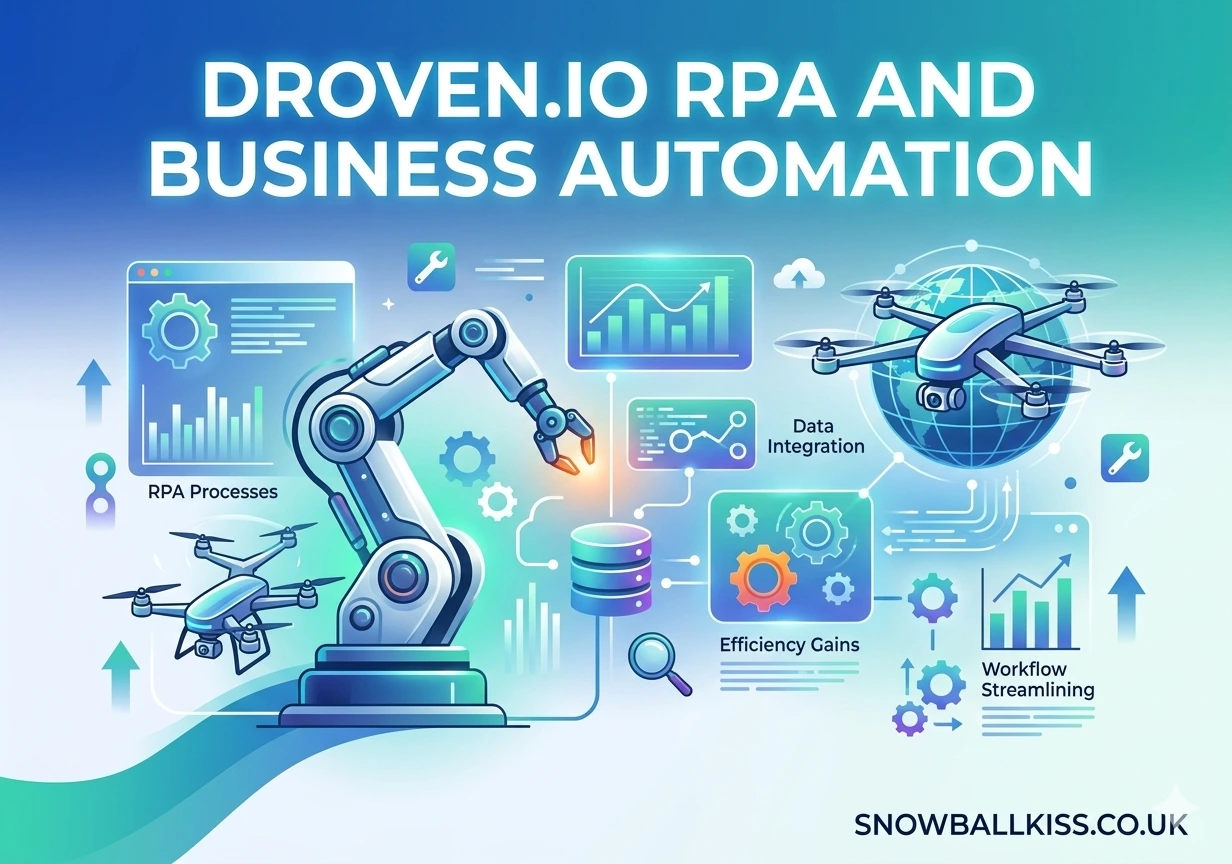
Droven.io RPA and Business Automation helps readers understand how modern companies can reduce repetitive work, improve accuracy, and build smarter digital workflows. In today’s fast-moving business environment, teams need better ways to manage data entry, reporting, customer support, HR tasks, finance processes, and daily operations. RPA uses software robots to handle repetitive computer-based tasks, such as moving files, filling forms, checking data, and generating reports. Because of this, automation has become a practical strategy for businesses that want to save time and work with fewer errors.
What Is Droven.io RPA and Business Automation?
Droven.io RPA and Business Automation refers to the way Droven.io explains robotic process automation and smarter workflow systems for modern businesses. Instead of focusing only on technical language, the platform presents automation as a practical business solution. RPA uses software bots to complete repetitive tasks that humans usually perform on computers. These tasks may include copying data, updating spreadsheets, processing invoices, checking emails, moving files, and generating reports.
Understanding RPA in Simple Terms
RPA works like a digital assistant that follows clear instructions. A business first identifies a repetitive task, maps the workflow, trains the bot, and then monitors the results. Droven.io’s own RPA guide explains that ideal automation tasks are high-volume, repetitive, rule-based, and time-consuming. This makes RPA useful for teams that manage large amounts of data or repeat the same process every day.
How Business Automation Adds More Value
Droven.io RPA and Business Automation goes beyond one small task. It connects workflows across departments, systems, and teams. For example, a customer form can trigger a confirmation email, update a CRM record, notify a sales manager, and create a follow-up task. This saves time and creates a smoother customer experience. When businesses combine RPA with workflow planning, they create stronger systems that support growth, consistency, and better decision-making.
Why Automation Matters for Modern Businesses
Modern companies face pressure to work faster, control costs, and deliver better service. Manual processes often slow teams down because people must repeat the same tasks across different tools. Over time, this creates delays, mistakes, and frustration. Automation helps businesses remove these bottlenecks. It allows employees to focus on customer service, strategy, problem-solving, and creative work instead of repetitive admin tasks.
Saving Time Across Departments
Time savings remain one of the biggest reasons companies explore automation. A task that takes an employee several hours can often run much faster through a structured automation workflow. Finance teams can process invoices, HR teams can manage onboarding steps, and operations teams can update records with less manual input. This does not remove the need for people. Instead, it gives people more time to do work that requires judgment and communication.
Reducing Human Error
Repetitive work increases the chance of mistakes. A person may copy the wrong number, miss a field, upload the wrong file, or forget a step. RPA bots follow the same instructions every time, which improves consistency. This matters in finance, healthcare, logistics, customer support, and any industry where accurate data affects decisions. Businesses still need monitoring, but automation can reduce many common manual errors.
Improving Employee Experience
Employees often feel drained when they spend their day on boring, repetitive tasks. Automation can improve morale by removing low-value work from daily routines. When people spend more time solving problems, helping customers, and improving processes, they feel more connected to meaningful goals. This makes automation not only a technology decision but also a workplace improvement strategy.
Key Features of Smart Workflow Automation
Smart workflow automation combines rules, triggers, data, and connected systems. It does not depend on one tool only. Instead, it creates a structured process that moves work from one step to the next without unnecessary manual effort. Droven.io RPA and Droven.io RPA and Business Automation fits this discussion because it helps readers understand how automation supports real business processes.
Rule-Based Task Automation
Rule-based automation works best when a process follows clear steps. For example, if an invoice arrives, the system can extract key details, compare them with purchase records, route them for approval, and update accounting software. These workflows need clear logic. When businesses define the rules carefully, automation can complete routine tasks quickly and consistently.
System Integration
Many businesses use several tools at once, such as email, spreadsheets, CRMs, accounting platforms, HR systems, inventory tools, and project management software. When these systems do not communicate well, employees waste time copying information from one place to another. Automation helps connect these tools so data moves more smoothly. This creates better visibility and reduces duplicate work.
Monitoring and Reporting
Automation needs oversight. Businesses should monitor bot activity, review exceptions, and check whether workflows perform as expected. Good reporting helps managers understand how many tasks were completed, where errors occurred, and which steps need improvement. This level of visibility supports better decisions and helps teams improve automation over time.
Real-World Uses of RPA and Business Automation
RPA and automation can support many departments. The best use cases usually involve repetitive, predictable, and high-volume work. Companies should not automate everything at once. They should start with simple workflows, measure results, and then expand into more complex processes. This careful approach reduces risk and improves long-term success.
Finance and Accounting
Finance teams often manage invoices, payment records, expense reports, purchase orders, and monthly statements. Automation can extract invoice details, check them against company records, flag mismatches, and route documents for approval. This speeds up the payment cycle and reduces manual data entry. It also helps finance leaders maintain cleaner records and stronger reporting.
Human Resources
HR departments handle onboarding, employee records, payroll support, attendance tracking, benefits updates, and document collection. Automation can send welcome emails, collect forms, create task lists, update HR systems, and remind employees about missing documents. This creates a smoother experience for new hires and reduces the admin load on HR teams.
Customer Service
Customer service teams can use automation to route tickets, send instant replies, update customer records, and assign cases to the right department. Simple requests can move faster, while human agents focus on complex issues that need empathy and judgment. This improves response times and helps customers feel supported.
Sales and Marketing
Sales and marketing teams can automate lead capture, follow-up emails, CRM updates, campaign reports, and customer segmentation. When a new lead fills out a form, automation can add the contact to a CRM, notify the sales team, and start a follow-up sequence. This helps businesses respond faster and avoid missed opportunities.
Benefits of Droven.io RPA and Business Automation for Growing Companies
Droven.io RPA and Business Automation gives growing companies a clearer way to think about automation before they invest in tools or consultants. Many business owners know they need efficiency, but they do not always know where to begin. Educational resources help them understand the difference between RPA, AI, workflow automation, and full digital transformation.
Better Productivity
Productivity improves when employees spend less time on repetitive work and more time on valuable tasks. Automation can handle routine steps in the background while teams focus on customers, planning, service quality, and business growth. This creates a stronger balance between technology and human skill.
Stronger Scalability
As businesses grow, manual processes become harder to manage. More customers, more orders, more invoices, and more employee records can create pressure on small teams. Automation helps companies handle larger workloads without adding the same level of manual effort. This makes growth more manageable and less chaotic.
Clearer Decision-Making
Automation can improve reporting by collecting and organizing data faster. Managers can use cleaner data to track performance, identify delays, and make better decisions. When information moves automatically between systems, teams spend less time searching for updates and more time acting on insights.
Challenges Businesses Should Consider
Automation brings strong benefits, but businesses should approach it carefully. A poorly planned automation project can create confusion, errors, or wasted spending. Teams need clear goals, clean data, strong security, and proper training. They should also understand which tasks are suitable for automation and which still need human judgment.
Process Quality Comes First
A bad process does not become better just because it is automated. If a workflow has unclear steps, messy data, or unnecessary approvals, automation may only make the problem move faster. Businesses should review and improve the process before building automation. This step helps teams avoid costly mistakes.
Security and Access Control
Automation tools often work with sensitive data, such as customer records, financial details, employee information, and business documents. Companies should control bot permissions, monitor activity, and protect data with strong security practices. RPA can be secure when businesses apply proper governance and limit access to only what each workflow requires.
Training and Change Management
Employees need to understand how automation will affect their daily work. Without clear communication, people may feel uncertain or resistant. Managers should explain the purpose of automation, show how it supports the team, and provide training. This builds trust and helps employees work confidently with new systems.
How to Start with RPA and Workflow Automation
The best way to start is with a focused pilot project. A company should choose one repetitive task that has clear rules, measurable results, and low risk. After testing the workflow, the team can review performance and decide whether to expand. This method keeps automation practical and manageable.
Step 1: Identify Repetitive Tasks
Start by listing tasks that take too much time or create frequent errors. Good examples include invoice entry, report generation, customer data updates, email sorting, appointment scheduling, and payroll support. The best first automation project should be simple enough to test but valuable enough to show real results.
Step 2: Map the Workflow
Write down each step in the process. Identify who handles the task, what tools they use, what data they need, and where errors usually happen. This workflow map helps teams understand what the bot or automation system must do. It also reveals steps that may need improvement before automation begins.
Step 3: Test, Monitor, and Improve
After building the workflow, test it with sample data. Check whether it follows the right steps, handles exceptions, and produces accurate results. Once the automation goes live, continue monitoring performance. Teams should update workflows when software changes, business rules shift, or new requirements appear.
Also Read: OnlyWorkMoods com Funny, Motivational & Relatable Work Moods
Future of RPA and Business Automation
The future of automation will likely combine RPA, artificial intelligence, data analytics, and low-code workflow tools. Traditional RPA follows fixed rules, while AI can help systems understand patterns, classify information, and support smarter decisions. This creates more flexible automation for businesses that want to improve service and scale operations.
Human-Automation Collaboration
Automation will not remove the need for people. Instead, it will change how people work. Employees will supervise workflows, handle exceptions, improve processes, and make decisions that require human understanding. The strongest companies will combine automation speed with human creativity, empathy, and strategic thinking.
More Accessible Tools
Low-code and no-code automation tools make workflow building easier for non-technical users. This allows business teams to design simple automations without waiting for full development teams. However, companies still need governance, documentation, and security rules. Easy tools can create strong results when businesses use them responsibly.
Smarter Digital Operations
As automation becomes more common, companies will expect faster workflows, cleaner data, and better reporting. Businesses that understand these trends early can compete more effectively. Droven.io RPA and Business Automation supports this learning journey by explaining automation concepts in a way that business readers can understand and apply.
FAQs
What is Droven.io?
Droven.io is an online technology knowledge platform that covers topics such as AI, RPA, Droven.io RPA and Business Automation, cloud computing, cybersecurity, and digital transformation.
Is RPA the same as AI?
No. RPA follows predefined rules, while AI can analyze patterns and support smarter decisions. Businesses can combine both for more advanced automation.
Can small businesses use RPA?
Yes. Small businesses can use RPA for simple tasks such as invoicing, email sorting, data entry, reports, and customer follow-ups.
What tasks should businesses automate first?
Businesses should start with repetitive, rule-based, high-volume tasks that take time and create frequent manual errors.
Does automation replace employees?
Automation does not need to replace employees. It can support them by removing repetitive work and allowing them to focus on higher-value tasks.
Conclusion
Droven.io RPA and Business Automation gives readers a clear way to understand smarter workflow solutions in a practical business context. RPA helps companies reduce repetitive work, save time, improve accuracy, and support better productivity. Droven.io RPA and Business Automation adds even more value by connecting systems, improving reporting, and creating smoother operations across departments. Companies should start small, choose clear use cases, train employees, and monitor results. With the right approach, automation can help modern businesses work faster, serve customers better, and grow with more confidence.
You May Also See: Snowballkiss