

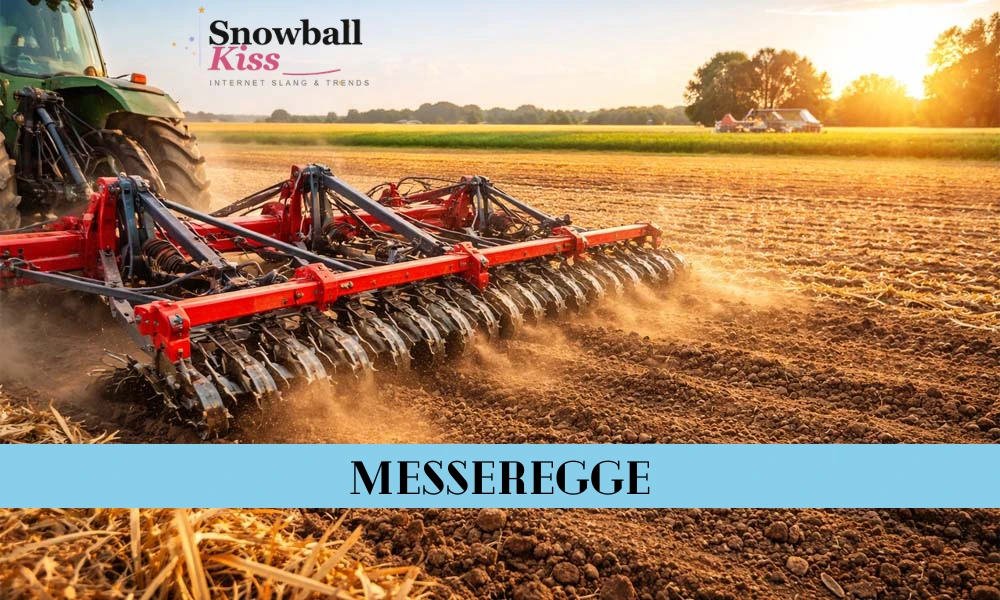
Messeregge is a term many people may see online but not fully understand at first. In simple words, it refers to a knife-style harrow or blade-based agricultural tool used for working the top layer of soil. Farmers and equipment specialists use this type of tool to cut crop residue, break small clods, level soil, and prepare fields for planting. For a U.S. audience, it helps to think of it as a practical soil-preparation implement that supports cleaner, smoother, and more efficient fieldwork.
What Is Messeregge?
Messeregge A knife-style harrow works on the upper soil layer instead of turning deep soil like a plow. Its blades or knife-like parts cut through plant residue, loosen crusted surfaces, and help create a more even field. This makes it useful after harvest, before seeding, or during field preparation when the soil needs light treatment. The tool does not replace every tillage machine, but it serves a specific purpose when farmers want controlled surface action with less disturbance than deeper equipment.
A Simple Way to Understand It
Imagine a field covered with leftover stalks, uneven soil, and light surface crust. A blade-based harrow moves across that surface and slices through residue while also disturbing the top layer of soil. This action makes the field easier to manage before the next crop. It can also help spread organic material more evenly across the field. Because of this, farmers may use it as part of a larger soil-management system rather than as a single solution for every field condition.
Why Messeregge Matters in Farming
Messeregge Modern farming depends on timing, soil health, and efficient machine use. A tool that prepares the surface quickly can save time during busy seasons. It helps farmers manage residue without always relying on aggressive deep tillage. This matters because excessive soil disturbance can increase erosion risk and reduce moisture retention in some conditions. By working mainly at the surface, a knife-style harrow can support cleaner seedbed preparation while still keeping the field structure more stable than heavier tillage methods.
Another reason this tool matters is its role in residue management. After crops such as corn, wheat, or other grains, fields often hold stalks, straw, and plant material. If that material stays uneven, it can interfere with planting and early crop growth. The cutting action helps break residue into smaller pieces so it can mix more naturally with the soil surface. As a result, the next field operation may run more smoothly and produce a more consistent planting environment.
How the Tool Works Without Complicating Soil Prep
The working idea is simple: blades contact the soil surface and cut through light material as the machine moves forward. Depending on the design, the tool may attach to a tractor, roller, or another piece of field equipment. Operators adjust working depth, speed, and angle based on soil condition and the amount of residue. When used correctly, the machine creates a smoother field surface without digging too deep or disturbing more soil than necessary.
Soil Contact and Cutting Action
The blades must contact the surface evenly to perform well. If they run too shallow, they may skip over residue. If they run too deep, they may drag too much soil and increase power demand. Good setup matters because every field has different moisture, texture, and residue levels. Clay soil, sandy soil, and loamy soil each respond differently. A careful operator checks the result after a short pass and adjusts the machine before covering the full field.
Speed and Field Conditions
Speed also affects performance. Moving too fast can make the tool bounce or leave uneven results. Moving too slowly may reduce efficiency and limit the cutting effect. Moisture plays an important role as well. Very wet soil can smear or stick, while extremely dry soil may resist light cutting. The best results usually come when the soil has enough moisture to break cleanly but not so much that it clumps heavily around the blades.
Main Parts and Design Features
A typical knife-style harrow includes a frame, blades, mounting points, adjustment features, and sometimes support wheels or rollers. The frame holds the tool together and spreads force across the working width. The blades do the main cutting work, so their size, thickness, angle, and sharpness matter. Strong mounting points keep the tool stable during operation. Adjustment features help the operator change depth, pressure, and field contact based on changing conditions.
The blade design affects how aggressively the tool works. Thinner blades may cut residue more easily, while heavier blades may last longer in tough conditions. Some parts may need replacement after heavy use, especially when fields contain stones, hard soil, or thick crop remains. Farmers should check bolts, brackets, and blade edges before each season. Regular inspection reduces breakdowns and helps the machine deliver consistent results across large field areas.
Benefits and Limitations for Beginners
The biggest benefit is practical surface preparation. The tool can help cut residue, level light unevenness, and prepare a better top layer for the next operation. It may also reduce the need for more aggressive tillage in certain situations. That can save fuel, protect soil structure, and support better field efficiency. For beginners, the main appeal is that the machine performs a clear job without requiring deep technical knowledge to understand its purpose.
However, it has limits. It cannot solve deep compaction, replace a plow in all conditions, or fix fields with major drainage problems. It also needs the right tractor power and proper setup to work well. If the soil contains heavy residue, large rocks, or extreme moisture, performance may drop. New users should avoid expecting one machine to handle every soil challenge. Instead, they should view it as one part of a broader field-preparation plan.
Best Use Cases
This tool works best where farmers need shallow soil action and residue cutting. It suits post-harvest field cleanup, light seedbed preparation, and surface leveling before planting. It may also support farms that want to reduce heavy tillage while still keeping fields manageable. In many cases, it works alongside rollers, cultivators, drills, or other implements. The best results come when the operator understands the field goal before choosing the machine settings.
How to Choose a Messeregge
Messeregge Choosing the right model starts with field size and tractor capacity. A wider machine covers more ground, but it also needs more power and better control. Smaller farms may prefer a narrower working width because it is easier to manage and store. Farmers should also consider soil type, crop residue, replacement parts, and local dealer support. A machine that looks good on paper may become costly if parts are hard to find.
Build quality also matters. Strong frames, durable blades, reliable bolts, and simple adjustment points can make daily work easier. Before buying, check whether the tool fits your tractor or existing equipment. Ask about working width, weight, blade thickness, mounting style, and maintenance needs. If possible, compare models in real field conditions. A short demonstration often reveals more than a product photo or specification sheet because soil performance depends on real-world conditions.
Care, Safety, and Practical Use
Good maintenance starts before the machine enters the field. Operators should inspect blades for wear, check fasteners, look for cracks, and confirm that all adjustment points move correctly. Worn blades reduce cutting quality and force the tractor to work harder. Loose bolts can damage the frame or create safety risks. Cleaning the machine after use also helps prevent rust and makes it easier to spot problems before the next operation.
Safety deserves equal attention. Blades can be sharp, heavy, and dangerous during transport or repair. Operators should lower the machine fully, turn off the tractor, and secure moving parts before inspection. Gloves, proper footwear, and eye protection help reduce injury risk. During fieldwork, keep bystanders away from the machine and avoid sudden turns at high speed. Safe habits protect people, reduce downtime, and extend the working life of the equipment.
Common Myths About Messeregge
One common myth says this tool is only an old-fashioned farming idea. In reality, blade-based harrow designs still appear in modern equipment systems because residue management remains important. Another myth says it performs the same job as every harrow. That is not accurate. Different harrows use tines, discs, chains, or blades, and each design affects soil differently. Understanding those differences helps farmers choose the right implement instead of relying on a general name.
Another misunderstanding comes from confusing the term with unrelated online definitions. Some websites describe it as a concept, food, or general cutting edge, but the clearest practical use connects it with agriculture and blade-harrow equipment. Beginners should focus on function rather than internet confusion. The useful question is simple: what does the tool do in the field? It cuts surface material, supports shallow preparation, and helps create a cleaner working layer for the next farming step.
FAQs
Is Messeregge a person or a tool?
It is not a person. It refers to a knife-style agricultural harrow or blade-based field tool used for surface soil preparation and residue cutting.
What does this tool do in farming?
It cuts crop residue, loosens the top soil layer, helps level the surface, and supports field preparation before planting or another machine operation.
Is it the same as a regular harrow?
No. A regular harrow can use different working parts, such as tines, discs, chains, or blades. This specific type focuses more on knife-style cutting action.
Can beginners use this equipment?
Yes, but they should learn basic setup, tractor matching, working depth, field speed, and safety rules before using it on a full field.
What should buyers check before choosing one?
Buyers should check working width, blade quality, frame strength, tractor compatibility, spare parts availability, soil type, and the amount of crop residue in their fields.
Conclusion
Messeregge may sound unfamiliar, but the idea behind it is easy to understand. It is a practical agricultural tool designed to cut residue and prepare the upper soil layer with controlled surface action. For beginners, its value comes from its simple purpose: cleaner fields, better residue handling, and smoother preparation before planting. It works best when farmers match it with the right soil conditions, tractor power, and field goals. With proper setup and maintenance, it can become a useful part of modern soil-management work.
You May Also See: Snowballkiss