

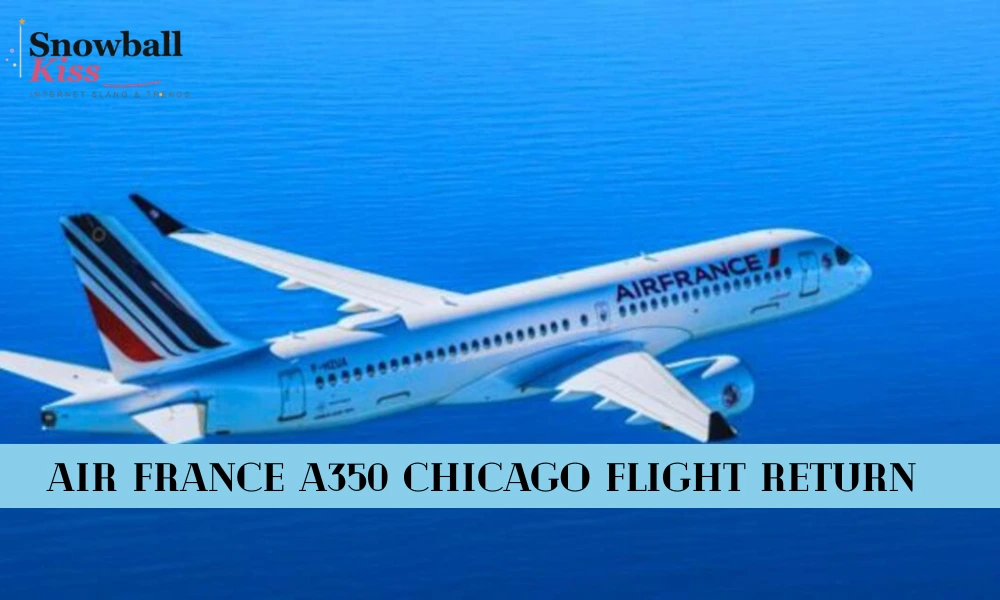
The Air France A350 Chicago Flight Return became a major aviation talking point after a Paris-to-Chicago service turned back over the Atlantic instead of continuing to Chicago O’Hare. For passengers, it meant hours in the air with no arrival at their planned destination. For aviation watchers, it raised questions about airline operations, landing clearance, route planning, and passenger handling. The incident did not appear to involve a dramatic onboard emergency, but it still showed how complex international flying can become when operational approval or arrival coordination changes mid-route.
What Happened During the Flight?
The Air France A350 Chicago Flight Return involved Flight AF136, a scheduled service from Paris Charles de Gaulle Airport to Chicago O’Hare International Airport. The aircraft departed Paris and followed a normal transatlantic route before it reversed course over the Atlantic. Instead of continuing toward the United States, the crew returned the aircraft to Paris. Reports described the aircraft as an Airbus A350-900, a modern long-haul jet commonly used for international routes.
The flight attracted attention because the aircraft had already spent several hours in the air before turning back. Long-haul flights can divert for many reasons, including weather, maintenance, medical concerns, crew limits, airport restrictions, or operational issues. In this case, reports connected the return to operational reasons and possible clearance concerns at Chicago. Air France did not provide a detailed public explanation, so careful wording matters. Calling it a confirmed emergency would be inaccurate.
Why the Story Spread Quickly
Flight-tracking websites made the incident visible almost immediately. Aviation enthusiasts and passengers can now watch route changes in real time, so a mid-Atlantic U-turn no longer stays quiet. Once the aircraft changed direction, people started sharing screenshots, asking questions, and comparing the movement with normal transatlantic patterns. That public attention turned a routine operational decision into a widely discussed aviation story.
Why It Confused Travelers
Most travelers expect a flight to continue unless the airline announces a serious problem. A return to the departure airport after several hours feels unusual, even when the aircraft remains safe. Passengers may have felt frustrated because they spent hours flying without reaching Chicago. However, airline crews do not make such decisions casually. A return usually means the airline believes the safest or most controlled solution is to bring the aircraft back to base.
Air France A350 Chicago Flight Return Timeline
The Air France A350 Chicago Flight Return timeline helps explain why the event looked so strange to the public. The flight left Paris, crossed part of the North Atlantic route, and then changed direction before reaching North America. Reports placed the turnback around the mid-Atlantic area between Iceland and Greenland. The aircraft then flew back to Paris and landed safely at Charles de Gaulle Airport.
Before Departure
Before any international flight leaves the gate, the airline files flight plans, confirms routing, checks aircraft readiness, manages crew duty time, and coordinates with airports and air traffic control. For flights to the United States, airlines also handle documentation, passenger data, customs requirements, and arrival coordination. These steps usually happen quietly in the background. Passengers only notice them when something goes wrong or changes unexpectedly.
During the Turnback
The most important point is simple: the aircraft returned safely. A turnback does not automatically mean the aircraft was unsafe. In many cases, airlines turn back because the destination side of the trip becomes operationally uncertain. That can include arrival permissions, airport processing, aircraft scheduling, crew planning, or regulatory requirements. Continuing toward the destination without clear authorization can create a larger problem later.
After Landing Back in Paris
After the aircraft landed back in Paris, Air France had to manage passengers, crew, and aircraft scheduling. The airline likely needed to arrange onward travel, provide information, and handle accommodation or rebooking for affected passengers. This recovery process matters because an aircraft return affects far more than one flight. It can disrupt gates, crews, future aircraft rotations, passenger connections, baggage handling, and customer service teams.
Why Did the Aircraft Turn Back?
The reported reason behind the Air France A350 Chicago Flight Return centers on operational issues, with several reports pointing to possible landing or clearance authorization problems at Chicago O’Hare. Air France reportedly used the phrase “operational reasons,” which gives the airline flexibility without revealing every internal detail. That phrase can cover a wide range of issues, from paperwork and scheduling to airport coordination and regulatory approval.
What “Operational Reasons” Can Mean
Airlines use “operational reasons” when the issue does not fit neatly into a simple public category. It may involve aircraft availability, crew duty limits, route planning, airport restrictions, ground handling, customs coordination, or landing permissions. The phrase does not always mean danger. In fact, it often means the airline chose a safer and more controlled option before the situation became more complicated.
Clearance Concerns Explained
Landing clearance involves permission and coordination. A long-haul aircraft cannot simply arrive at a major international airport without proper approval, sequencing, documentation, and coordination. Airports like Chicago O’Hare handle huge volumes of traffic, and international arrivals must also meet border-processing requirements. If any part of that process becomes unclear, delayed, or invalid, the airline may decide not to continue toward the destination.
Why the Airline May Not Share Everything
Airlines often avoid detailed public explanations during operational incidents. They may still be reviewing internal records, communication logs, crew reports, airport coordination, and passenger support actions. A short explanation can frustrate passengers, but it also prevents the airline from releasing incomplete information. For readers, the smart approach is to separate confirmed facts from reported claims.
Why Returning to Paris Made Operational Sense
At first, returning to Paris after several hours in the air sounds wasteful. However, airline decisions depend on more than distance. The Air France A350 Chicago Flight Return likely made operational sense because Paris Charles de Gaulle is Air France’s main hub. Returning to a home base gives the airline better control over maintenance, crew replacement, passenger rebooking, ground staff, and aircraft scheduling.
Returning Versus Diverting
Some people may ask why the aircraft did not land somewhere closer. A diversion can work well during a medical emergency or mechanical concern, but it can also create new problems. The airline must consider whether the diversion airport can handle the aircraft, process passengers, manage baggage, provide gates, and support onward travel. If the aircraft remains safe and has enough fuel, returning to the home hub may create the cleanest recovery plan.
Crew and Aircraft Planning
Crew duty time matters on every long-haul flight. Pilots and cabin crew can only work within legal limits. A return creates a scheduling challenge, but it may still be easier to solve at the airline’s main base. The same applies to the aircraft. Air France can inspect, service, refuel, and reassign an aircraft more easily in Paris than at a random diversion airport.
Passenger Recovery
Passengers care about one thing: reaching their destination. Once the flight returned, Air France had to move from flight operation to passenger recovery. That means updated information, rebooking, possible hotel arrangements, meal support, and baggage coordination. Strong passenger communication becomes critical because confusion grows quickly after a long flight ends where it started.
What the Incident Shows About the Airbus A350
The Airbus A350 is a modern long-haul aircraft built for routes like Paris to Chicago. It features efficient engines, advanced flight systems, long range, and a passenger cabin designed for comfort on international flights. The aircraft itself was not the main issue in the Air France A350 Chicago Flight Return, based on available reports. Instead, the story appears connected to operations and clearance coordination.
A Long-Haul Aircraft Built for Routes Like This
Air France uses the Airbus A350-900 on long-haul routes because it offers fuel efficiency, range, and modern cabin features. Passengers often associate the A350 with a quieter cabin, improved lighting, and a smoother long-distance experience. These aircraft support major international networks, especially between Europe and North America. That is why an A350 on a Paris-to-Chicago route makes sense from a fleet-planning perspective.
The Aircraft Still Depends on Ground Coordination
A modern aircraft can fly long distances safely, but it still depends on people and systems on the ground. Dispatchers, air traffic controllers, airport authorities, customs teams, gate planners, and airline operations staff all play a role. A flight can have a perfectly capable aircraft and still face a serious operational barrier. That is the key lesson many readers miss.
Technology Makes the Decision Visible
The aircraft’s technology may help crews and dispatchers manage route changes, but public tracking technology makes those decisions visible to everyone. Passengers and aviation followers can watch aircraft movement live. This transparency creates public interest, but it also creates rumors. A strange flight path does not always reveal the full reason behind a decision.
Also Read: Turaska Guide: Meaning, Origin, Facts, and Importance
What Passengers Should Know After a Flight Return
A return like this can feel stressful, especially for passengers with hotel bookings, business meetings, family events, or connecting flights in the United States. The Air France A350 Chicago Flight Return shows why travelers should understand their basic options after major disruptions. Airline staff usually handle rebooking first, but passengers should also document expenses, save messages, and check compensation rules where applicable.
Keep Records and Confirm Rebooking
Passengers should keep boarding passes, booking confirmations, delay notices, meal receipts, hotel receipts, and airline messages. These records help when asking for reimbursement or support. They also help if travel insurance requires proof of disruption. After a return, passengers should confirm their new flight details instead of relying only on verbal updates at the airport.
Use Official Airline Channels
Social media can spread updates quickly, but official airline channels matter more. Passengers should check the Air France app, website, email notifications, airport display screens, and service desks. Flight-tracking apps can show aircraft movement, but they cannot always explain why a decision happened. Official communication remains the best source for rebooking and passenger rights.
Stay Calm but Be Practical
Passengers do not need to panic during a turnback, especially if the crew does not announce an emergency. However, they should act practically after landing. They should ask about hotels, meals, next available flights, baggage handling, missed connections, and written confirmation of the disruption. Calm passengers often get better results because they can focus on solutions instead of rumors.
Also Read: HopTraveler.com: Explore Travel Tips, Destinations, and Journey Guides
Why This Story Matters for U.S. Travelers
The United States is one of the busiest international aviation markets in the world, and Chicago O’Hare is a major gateway. The Air France A350 Chicago Flight Return matters to U.S. readers because it shows how even a major airline flying a modern aircraft can face complex operational barriers. International travel depends on more than aircraft performance and weather.
O’Hare’s Role as a Major Gateway
Chicago O’Hare handles domestic and international traffic at a massive scale. Flights arriving from Europe must coordinate with U.S. airport operations, customs processing, and air traffic systems. When everything works, passengers barely notice. When one part of the chain fails or changes, the impact can reach hundreds of travelers. That is why a single flight return can become a large operational event.
The Reality of Modern Travel
Modern travel feels simple from the passenger seat: book, board, fly, arrive. Behind that simple journey sits a complex system. Airlines must coordinate across countries, time zones, agencies, airports, and aircraft fleets. This event reminds travelers that aviation safety and compliance come before convenience. It also proves that a safe landing back at the departure airport can still count as the right decision.
Why Rumors Spread So Fast
The internet rewards dramatic aviation headlines. Phrases like “denied landing” or “flight to nowhere” attract clicks, but they can oversimplify the story. The better explanation is more technical: the flight returned because an operational condition made continuing less practical or less certain. That may sound less dramatic, but it gives readers a more accurate understanding.
FAQs
What happened to the Air France A350 flight to Chicago?
The aircraft departed Paris for Chicago but turned back over the Atlantic and returned safely to Paris. Reports described the reason as operational, with possible clearance or landing authorization concerns.
Was there an emergency on board?
Available reports did not clearly describe a major onboard emergency. The situation appears more connected to operational coordination than to a confirmed aircraft safety emergency.
Did the flight land in Chicago?
No. The aircraft returned to Paris instead of continuing to Chicago O’Hare International Airport.
Why would a flight return after several hours?
A flight may return when the airline believes the departure airport offers the safest and most controlled recovery option. Crew limits, passenger handling, maintenance, clearance issues, and airport coordination can all influence that decision.
Is the Airbus A350 safe?
Yes. The Airbus A350 is a modern long-haul aircraft used by major international airlines. This incident appears related to operations and coordination, not a confirmed aircraft design problem.
Conclusion
The Air France A350 Chicago Flight Return was unusual, frustrating for passengers, and highly visible because of live flight tracking. However, the available information points toward an operational decision rather than a dramatic onboard emergency. Flight AF136 returned safely to Paris after reports linked the incident to clearance or arrival authorization concerns involving Chicago O’Hare. The event shows how international aviation depends on strict coordination between airlines, airports, regulators, and air traffic systems. For travelers, the main lesson is clear: safety and operational control always come before convenience.
You May Also See: Snowballkiss