
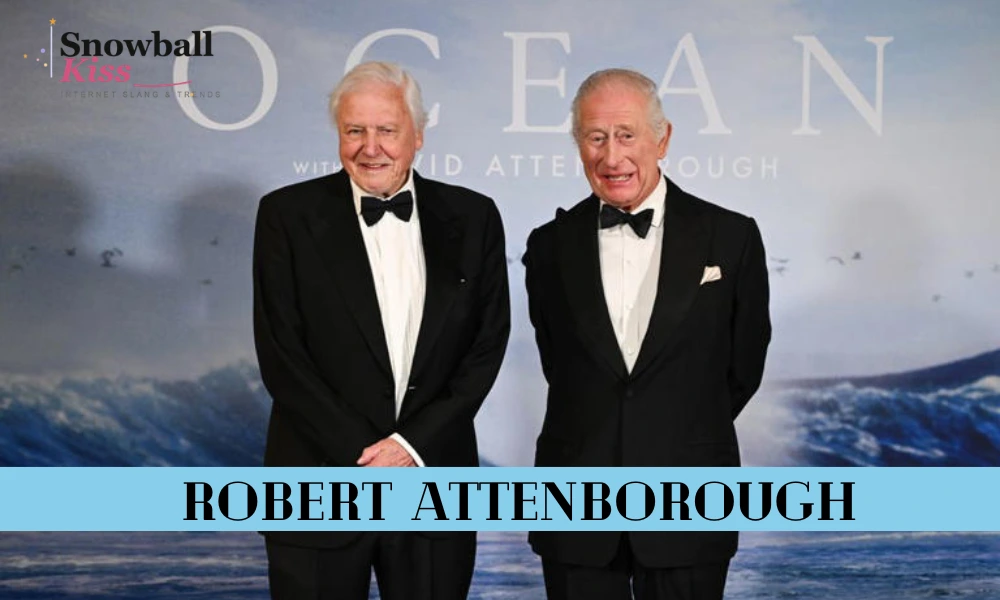
Robert Attenborough is widely recognized because of his connection to one of the world’s most respected natural historians, Sir David Attenborough. However, his own life story is not built around television fame or public attention. Instead, he has followed a quieter path in academic research, biological anthropology, and human population studies. His career reflects a serious interest in science, health, human evolution, and the people of Papua New Guinea. This biography explores his family background, professional work, private life, and place within the wider Attenborough legacy.
Quick Bio Robert Attenborough
| Field | Details |
| Full Name | Robert David Attenborough |
| Known As | Robert Attenborough |
| Date of Birth | August 1951 |
| Age | 74 years old as of 2026 |
| Nationality | British |
| Profession | Academic, researcher, biological anthropologist |
| Main Field | Biological anthropology and human population biology |
| Research Interests | Human population biology, health, nutrition, demography, evolutionary anthropology |
| Regional Research Focus | Papua New Guinea, Oceania, and the Pacific |
| Father | Sir David Attenborough |
| Mother | Jane Elizabeth Ebsworth Oriel |
| Sibling | Susan Jane Attenborough |
| Academic Connection | Australian National University and University of Cambridge |
| Cambridge Role | Senior Fellow, McDonald Institute for Archaeological Research |
| ANU Role | Honorary Senior Lecturer, ANU College of Arts and Social Sciences |
| Business Role | Director of David Attenborough (Productions) Limited |
| Known For | Academic research and being the son of Sir David Attenborough |
| Public Profile | Private and low-profile |
Early Life and Family Background
Robert Attenborough was born into a family where education, curiosity, and public service played an important role. His father, Sir David Attenborough, became one of the most famous broadcasters in the world, while his mother, Jane Elizabeth Ebsworth Oriel, remained a private but important figure in the family. Britannica confirms that David and Jane married in 1950 and had two children, Robert and Susan. The couple remained married for 47 years until Jane’s death in 1997.
Growing up as the child of a famous broadcaster could have led to a public life, but Robert Attenborough chose a different route. Instead of following his father into television, he built a career in scholarship and research. This choice shows the quieter side of the Attenborough family story. While Sir David became known for bringing the natural world into millions of homes, his son focused on studying human populations, health, and evolution through academic work.
The Influence of the Attenborough Family
The Attenborough name carries strong associations with science, education, and culture. Sir David’s documentaries helped shape how people understand animals, ecosystems, and conservation. Robert Attenborough uncle, Richard Attenborough, was also a major public figure as an actor and film director. In such a family, public recognition could have been easy to pursue. Yet Robert’s life suggests a preference for serious work over celebrity attention.
This family background is important because it explains why public curiosity surrounds him. Many people search for information about David Attenborough’s children because they want to know whether they followed his path. In Robert Attenborough case, the answer is both yes and no. He followed a scientific path, but not through broadcasting. His work belongs more to universities, research projects, and scholarly publications than to television screens.
Education, Science, and Academic Direction
Robert’s professional identity is closely tied to biological anthropology. This field studies humans from a biological and evolutionary perspective. It can include research into human variation, health, adaptation, population history, genetics, and the relationship between people and their environment. Through this field, scholars try to understand how humans have changed over time and how different communities respond to social, biological, and ecological pressures.
His academic direction also connects naturally with the wider Attenborough interest in life, nature, and science. However, his focus is more specific than his father’s broad natural history work. Instead of presenting animals and ecosystems to a general audience, Robert has studied human populations and health in particular regions. This makes his career less visible to the public, but still meaningful within academic and scientific circles.
Robert Attenborough Career and Research Work
Robert Attenborough has been associated with respected academic institutions, especially the Australian National University and the University of Cambridge. ANU identifies him as an Honorary Senior Lecturer at the ANU College of Arts and Social Sciences. The university notes that his recent research has focused on health, nutrition, and demography in Papua New Guinea, which reflects his long-term interest in human biology and population studies.
The University of Cambridge also lists Dr Robert Attenborough in its Department of Archaeology. His research is described as human population biology and health, especially in New Guinea, along with evolutionary and behavioural anthropology. Cambridge lists him as a Senior Fellow at the McDonald Institute for Archaeological Research and places his affiliations within biological anthropology, human evolutionary studies, and Oceania and the Pacific.
Work Related to Papua New Guinea
One of the most important parts of his academic profile is his connection to Papua New Guinea. This region is highly significant for scholars because of its human diversity, language variety, environmental complexity, and deep population history. Researchers studying the area often examine how geography, health, culture, genetics, and demography interact. Robert Attenborough work fits within this broader scientific effort to understand human populations in a complex setting.
Oxford Academic lists Human Biology in Papua New Guinea: The Small Cosmos as a book edited by Robert Attenborough D. Attenborough and Michael P. Alpers. The book describes Papua New Guinea as a region with major human diversity in a small geographical area and covers subjects such as geography, demography, social anthropology, linguistics, human genetics, and biomedical research.
Also Read: Eileen Catterson: Biography, Career, Family, and Life Story
Academic Contribution and Research Value
Robert Attenborough work matters because it helps connect human biology with real-world population history. Research in this area is not only about ancient origins or genetic patterns. It can also help scholars understand health, adaptation, nutrition, disease, migration, and how communities live within specific environments. In this sense, his academic career contributes to a deeper understanding of people, place, and biological change.
His name also appears in more recent research connected with New Guinea. ANU’s research portal lists him as one of the authors of a 2025 chapter on New Guinea’s deep histories, human genetics, regional demography, and archaic introgression. The work reviews themes such as early human dispersal to Sahul and connections among New Guinean and regional populations.
Private Life and Public Interest
Although public interest in his life is understandable, Robert has not lived as a public celebrity. Most available information about him comes from university profiles, official company records, and articles about Sir David Attenborough’s family. There is limited reliable public information about his personal life, marriage, children, or daily activities. Because of that, a responsible biography should avoid guessing or presenting rumors as facts.
This privacy is part of what makes his story different. Many people connected to famous families are drawn into public attention, but Robert’s public image remains centered on academic work rather than personal exposure. That makes him an example of someone who belongs to a famous family but has maintained a separate and independent professional identity. His life shows that influence does not always need publicity.
Family Company and Official Records
Official public records also connect Robert to David Attenborough (Productions) Limited. Companies House lists Robert David Attenborough as a British director of the company, with an appointment date of 18 February 1997. The same public record lists his date of birth as August 1951. It also lists Sir David Attenborough and Susan Jane Attenborough among the company’s officers.
This business role does not define his whole career, but it shows his formal connection to family affairs. It also gives one of the clearest verified records for his full name, birth month and year, nationality, and director status. For readers looking for accurate biographical details, official records are more reliable than unsourced celebrity summaries. They help separate confirmed facts from repeated online assumptions.
Relationship With Sir David Attenborough
The relationship between Robert and Sir David is often discussed because of David Attenborough’s global reputation. Sir David spent much of his life traveling for television work, which meant long periods away from home. Public interviews have sometimes reflected on the cost of that work-life balance. Still, the family has generally remained private, and David has rarely turned his children’s lives into public material.
HELLO! Magazine reported that David once recalled giving his son a salamander as a birthday present, a story that reflected the family’s closeness to nature and animals. The same report also noted that Robert’s research at Cambridge is listed in human population biology, health, New Guinea, and evolutionary anthropology.
Why His Story Matters
Robert’s life story is interesting because it offers a different kind of legacy. Many people measure success through fame, media visibility, or public recognition. His career shows another path: long-term academic work, careful research, and contribution through knowledge. He did not become a broadcaster like his father, but he still worked in fields linked to science, humanity, and the natural world.
His story also helps broaden the meaning of the Attenborough legacy. Sir David brought nature to audiences through film and narration. Robert studied human populations through research and academic inquiry. Both paths involve curiosity about life, but they express it in different ways. One is public and visual. The other is scholarly and specialized. Together, they show how one family’s intellectual influence can take many forms.
Public Image and Media Coverage
Online interest in Robert has grown because readers want to know more about the private members of famous families. However, much of the available coverage repeats the same basic facts: he is David Attenborough’s son, he works in biological anthropology, and he has kept a low profile. Some pages also focus heavily on his age, which can make the topic feel thin if the article does not add context.
A stronger article should avoid treating him only as a celebrity relative. His academic background deserves more attention. The most useful coverage explains what biological anthropology is, why Papua New Guinea matters in human biology, and how official sources confirm his roles. That approach gives readers more value while staying respectful of his privacy and avoiding unsupported claims.
Legacy, Science, and a Quiet Career
Robert’s legacy is quieter than his father’s, but quiet does not mean unimportant. Academic work often reaches people indirectly through students, research teams, books, and future studies. A scholar may not become a household name, yet their work can support knowledge that other researchers continue to build on. This is especially true in specialized fields like human population biology and evolutionary anthropology.
His career also reminds readers that famous families are made of individuals with different goals. Sir David Attenborough became a global communicator. Robert became a researcher with a more private professional life. Both paths reflect a commitment to learning. For readers, that contrast makes his biography more meaningful than a simple family profile or age-based search result.
FAQs
Who is Robert Attenborough?
Robert Attenborough is a British academic and biological anthropologist. He is also the son of Sir David Attenborough and Jane Elizabeth Ebsworth Oriel.
How old is he?
Official Companies House records list his date of birth as August 1951, which makes him 74 years old as of 2026.
What is he known for?
He is known for academic work in biological anthropology, human population biology, health, demography, and research connected to Papua New Guinea.
Is he related to Sir David Attenborough?
Yes. He is Sir David Attenborough’s son. David and Jane Attenborough had two children, Robert and Susan.
Does he work in television?
He is not mainly known as a television personality. His public profile is based more on academic research than media work.
Conclusion
Robert Attenborough life story is best understood as the journey of a private scholar from a famous family. While his father became one of the world’s most admired broadcasters, he built a quieter career in biological anthropology, human population biology, and research linked to Papua New Guinea. Verified records show his academic roles, family background, and business connection to David Attenborough (Productions) Limited. His story is valuable because it shows that meaningful work can happen outside fame, through research, education, and lifelong intellectual focus.
You May Also See: Snowballkiss