

Finding the right adjective for a person who quits quickly is not always simple. People stop trying for many reasons, including fear, disappointment, indecision, low confidence, or lack of determination. When someone asks what is an adjective for someone who gives up easily, the answer depends on the exact behavior being described. A word that fits one situation may sound inaccurate or unnecessarily harsh in another.
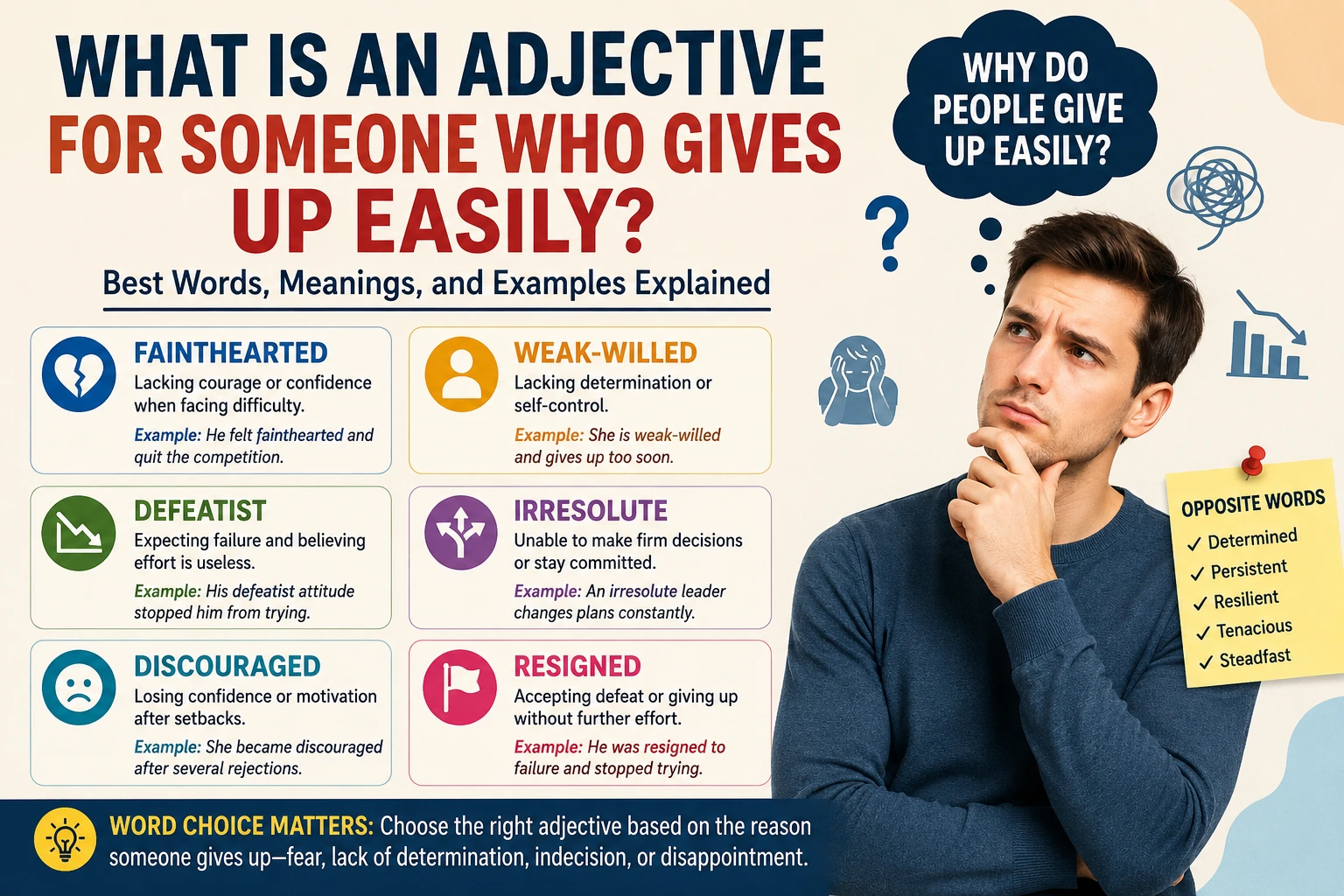
Several useful adjectives can express this idea, including fainthearted, weak-willed, defeatist, irresolute, discouraged, and resigned. Each word carries a slightly different meaning and emotional tone. Some describe a person’s personality, while others describe a temporary emotional state. Choosing carefully helps your sentence sound clear, fair, and natural, whether you are writing an essay, describing a fictional character, or speaking about someone in everyday life.
Why Some People Give Up Easily
Some people stop trying because they fear failure, embarrassment, criticism, or rejection. They may have the ability to succeed, but their confidence disappears when a challenge becomes uncomfortable. In this situation, fainthearted can be an appropriate adjective. It describes someone who lacks courage when facing difficulty. The word can sound critical, but it focuses more on fear and hesitation than on laziness or unwillingness to work.
Other people give up because they expect failure before making a serious attempt. They may believe that effort is pointless or that success is impossible. Such a person can be described as defeatist. A defeatist attitude often appears in statements such as, “I will never succeed,” or “There is no reason to continue.” This adjective is useful when negative expectations, rather than fear alone, cause someone to abandon a goal. Developing practical habits and a growth mindset can help people recover from setbacks and remain focused on long-term goals.
Best Adjectives for Someone Who Gives Up Easily
Fainthearted is one of the strongest general answers to what is an adjective for someone who gives up easily. It describes someone who loses courage when a task becomes stressful, risky, or demanding. For example, a fainthearted contestant may leave a competition after seeing how skilled the other participants are. This word works best when fear, nervousness, or lack of confidence is the main reason for quitting.
Weak-willed is another useful adjective, especially when someone lacks determination or self-control. A weak-willed person may make a plan but abandon it as soon as the process becomes difficult. For example, someone may promise to exercise every morning but stop after two uncomfortable sessions. Weak-willed is more critical than discouraged because it suggests an ongoing weakness in decision-making rather than a temporary loss of motivation.
How Fainthearted, Defeatist, and Irresolute Differ
A fainthearted person gives up because courage disappears. A defeatist person gives up because failure seems certain. An irresolute person may quit because they cannot make or maintain a firm decision. These words overlap, but they highlight different causes. Understanding those differences is important when answering what is an adjective for someone who gives up easily in a specific sentence, story, workplace description, or academic discussion.
Irresolute is a more formal word than fainthearted or weak-willed. It describes someone who is uncertain, hesitant, or unable to commit to a clear decision. An irresolute manager might repeatedly change a business plan until the team loses time and confidence. The person may not be afraid or negative, but their lack of firmness prevents progress. This adjective is especially useful in formal writing and character analysis.
Gentler Words for Someone Who Stops Trying
Discouraged is a gentler and more compassionate adjective. It describes someone who has lost confidence or motivation after facing disappointment, criticism, or repeated failure. A discouraged student may stop applying for scholarships after receiving several rejections. This does not necessarily mean the student has a weak personality. It may simply mean that the person needs support, rest, better guidance, or a new approach before trying again.
Resigned is another softer option, although its meaning is different. A resigned person accepts an unpleasant result and no longer tries to change it. For example, an employee may become resigned after realizing that a company decision cannot be reversed. The word does not always suggest weakness. Sometimes resignation comes from realistic acceptance. It is suitable when someone stops resisting rather than suddenly quitting because of fear or low determination.
Strong and Potentially Offensive Words
Spineless is a very strong adjective for someone who appears to lack courage or strength of character. It may describe a person who refuses to defend themselves, support others, or face responsibility. However, it is usually insulting and should be used carefully. In professional writing, respectful discussion, or workplace communication, softer expressions such as easily discouraged, hesitant, or lacking persistence are usually more suitable and constructive.
Cowardly can also describe someone who gives up because of fear, but it carries a harsh judgment. Calling a person cowardly suggests that they failed to show courage when courage was expected. It should not be used simply because someone changed plans or stopped an unhealthy activity. Before selecting a strong adjective, consider whether the person is truly avoiding responsibility or simply making a reasonable decision based on new information.
Why “Quitter” Is Not an Adjective
Quitter is probably the most common everyday word for someone who gives up easily, but it is a noun rather than an adjective. You can correctly say, “He is a quitter,” or “She does not want to be known as a quitter.” You would not normally say, “He is a quitter person.” Understanding this difference helps writers choose the correct sentence structure and avoid a common grammar mistake.
When an adjective is needed before a noun, words such as fainthearted, weak-willed, defeatist, irresolute, or discouraged are better choices. You could write, “He is a fainthearted competitor,” or “She has a defeatist attitude.” Sometimes a phrase sounds more natural than one word. Expressions such as easily discouraged, quick to surrender, lacking perseverance, and unwilling to persist can communicate the meaning clearly without sounding overly personal or insulting.
Choosing the Right Adjective for Different Situations
In academic writing, irresolute, defeatist, or lacking perseverance often sound more professional than spineless or cowardly. In the workplace, phrases such as easily discouraged or struggles to maintain persistence can describe behavior without attacking someone’s character. When answering what is an adjective for someone who gives up easily, always consider the purpose of the sentence, the relationship between the people involved, and the level of formality required. Clear word choice and communication help readers understand the intended meaning without unnecessary confusion.
In fiction and creative writing, stronger adjectives can help reveal a character’s personality. A fainthearted hero may avoid danger, while a defeatist character may believe every plan will fail. An irresolute leader may lose opportunities because of indecision. These distinctions make characters more believable. Instead of using the same word repeatedly, writers can select an adjective that reflects the character’s fears, habits, motivation, and response to pressure.
Common Word-Choice Mistakes
One common mistake is using lazy for everyone who gives up. Laziness means avoiding effort, but quitting can result from anxiety, confusion, exhaustion, disappointment, or lack of confidence. A person may work very hard and still become discouraged after repeated setbacks. Calling that person lazy would be inaccurate. Good writing identifies the real reason behind the behavior instead of relying on a general negative label.
Another mistake is assuming that stopping always shows weakness. Sometimes giving up is sensible, especially when a goal is harmful, unrealistic, or no longer valuable. A person who leaves an unhealthy job or ends an unsuccessful plan may be showing good judgment rather than weak determination. Context matters. The best adjective should describe what actually happened, not automatically criticize someone for choosing a different direction.
Conclusion
When people ask what is an adjective for someone who gives up easily, no single answer works in every situation. Fainthearted focuses on fear, weak-willed suggests poor determination, defeatist reflects negative expectations, and irresolute describes indecision. Discouraged and resigned offer gentler alternatives when quitting results from disappointment or acceptance. Choosing the right word makes your meaning more precise and prevents unnecessary misunderstanding.
Before describing someone, consider why the person stopped trying and whether the behavior is temporary or repeated. A respectful phrase such as easily discouraged may be more appropriate than a harsh label such as spineless. Precise language does more than improve grammar; it helps readers understand motivation, personality, and context. The best adjective is the one that communicates the situation accurately without adding judgment that the facts do not support.
FAQs
What Is the Best Adjective for Someone Who Gives Up Easily?
Fainthearted is one of the best general adjectives for someone who gives up easily because of fear or low confidence. However, weak-willed may be more accurate when the person lacks determination, while defeatist describes someone who expects failure before making a serious effort. The correct word depends on why the person stops trying and how critical or polite the sentence should sound.
Is “Quitter” an Adjective or a Noun?
Quitter is a noun, not an adjective. It refers to a person who stops trying or leaves a task before completing it. For example, you can say, “He is a quitter.” When you need an adjective before a noun, use words such as fainthearted, weak-willed, defeatist, irresolute, or discouraged. For example, “She is a fainthearted competitor” uses the adjective correctly.
What Is a Polite Word for Someone Who Gives Up Easily?
Easily discouraged is one of the most polite expressions for someone who gives up easily. It explains that the person loses confidence or motivation without directly attacking their character. Other respectful phrases include lacking persistence, hesitant under pressure, and struggling to stay motivated. These options are especially suitable for workplace feedback, school reports, and personal conversations where harsh words could create unnecessary conflict.
What Does Fainthearted Mean?
Fainthearted describes someone who lacks courage or confidence when facing danger, difficulty, or pressure. A fainthearted person may stop trying because the situation feels too risky or uncomfortable. For example, a fainthearted contestant may leave a competition after seeing stronger opponents. The word is somewhat critical, but it is usually less offensive than terms such as spineless or cowardly.
Is Weak-Willed the Same as Lazy?
Weak-willed and lazy do not mean the same thing. Weak-willed describes someone who lacks determination, self-control, or the ability to maintain a decision. Lazy describes someone who avoids effort or work. A weak-willed person may genuinely want to succeed but struggle to continue, while a lazy person may simply be unwilling to make the required effort from the beginning.
What Is a Formal Word for Someone Who Gives Up Easily?
Irresolute is a useful formal adjective for someone who cannot make or maintain firm decisions. Defeatist is another formal option when the person expects failure and stops trying because of negative thinking. In professional or academic writing, phrases such as lacking perseverance, easily discouraged, or unwilling to persist may sound more objective and respectful than stronger words that criticize the person’s character.
Is “Spineless” an Offensive Word?
Spineless is usually considered insulting because it suggests that a person lacks courage, principles, or strength of character. It is stronger than fainthearted or discouraged and can easily sound like a personal attack. The word may work in fiction, dramatic dialogue, or angry speech, but it should generally be avoided in professional communication. A gentler phrase such as hesitant or lacking confidence is often more appropriate.
What Do You Call Someone Who Expects to Fail?
A person who expects failure and sees little value in continuing can be described as defeatist. A defeatist attitude often causes someone to surrender before giving a task a fair chance. For example, a defeatist student may believe that studying is pointless because they expect to fail. This word focuses on negative expectations rather than fear, laziness, or lack of ability.